 TheVetCSR
Blog / Emergency Triage
"He got bit by a snake. Should I cut it and suck out the venom?"
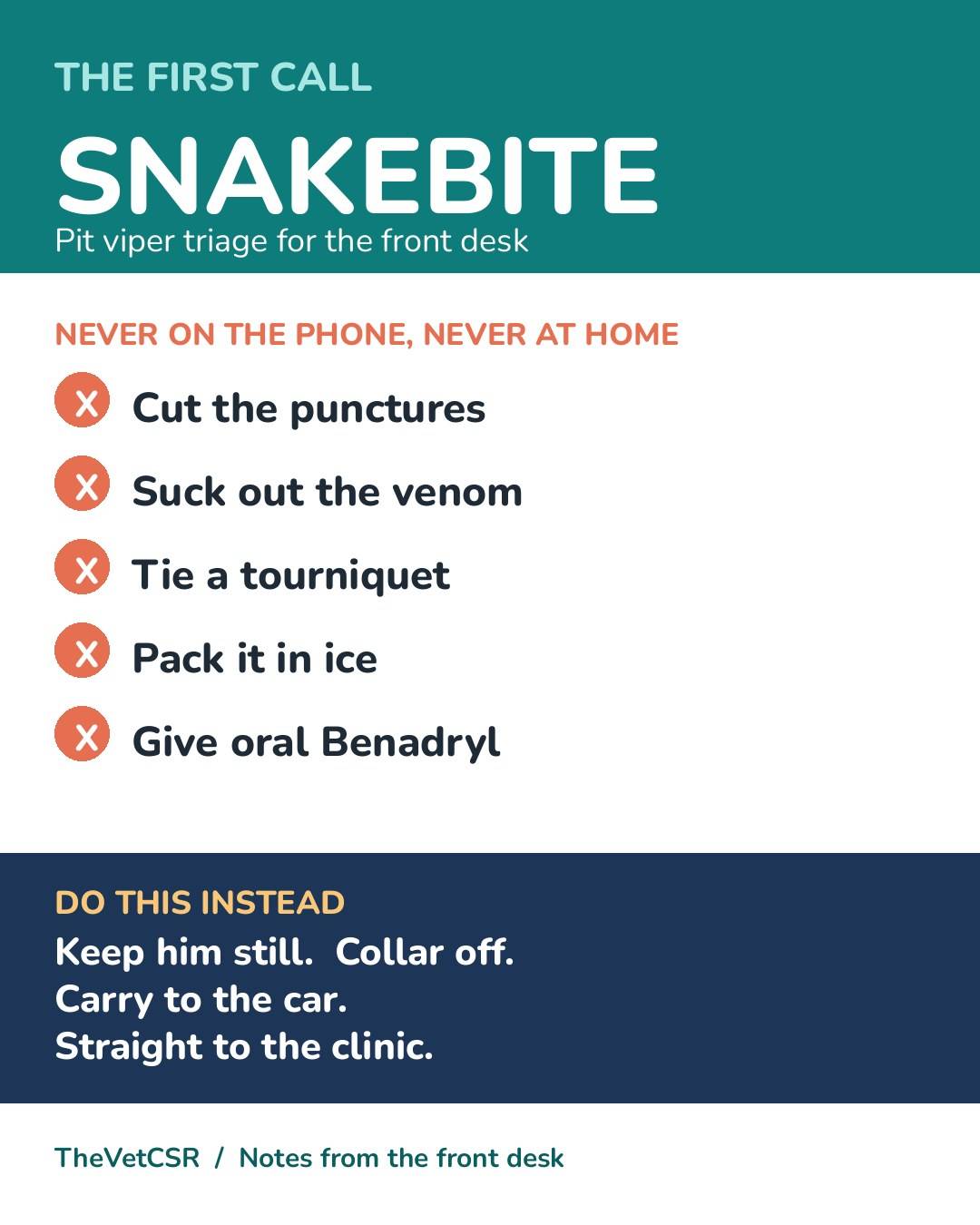
No. No cutting, no suction, no tourniquet, no ice, no Benadryl. How the front desk triages a canine pit viper bite, shuts down the movie first aid, and gets the dog to antivenom and airway help fast.
A panicked voice comes through the phone on a warm evening: "My dog was sniffing in the brush and a copperhead struck him right on the muzzle. His face is swelling up like a balloon, he is crying, and I see two bloody puncture marks. Should I cut an X over the holes and suck out the venom, put a tourniquet around his neck, or pack his head in ice?"
Few emergencies bring as much dangerous, outdated folklore with them as a snakebite. The old movie first aid (cutting the wound, mouth suction, tight tourniquets, ice, oral Benadryl) can do more damage than the venom itself. Triaging a pit viper bite (copperhead, cottonmouth, rattlesnake) from the front desk means one thing first: calm, authoritative de-escalation, and a car moving toward the clinic.
What the venom is doing, in desk language
You do not treat this. The team does. But knowing why minutes matter makes your note better and your voice calmer.
- It digests tissue. Pit viper venom is a mix of enzymes built to break down tissue and blood vessels. That is why swelling is fast and dramatic, and why the bite site can keep getting worse after the dog arrives.
- It can break the clotting system. Some venom enzymes use up the blood's clotting supplies (clinicians call this venom-induced consumptive coagulopathy). A dog who cannot clot normally is a dog the team needs to see now, not after dinner.
- It can change the red blood cells. One of the lab hallmarks the team may look for on a fresh blood smear is echinocytes, red cells that turn spiky after envenomation. That is the team's test, not yours. Your job is the time of the bite and the owner's words, written down clean.
- It can close the airway. Most strikes land on the head, muzzle, neck, or a leg. Swelling around the face and throat can threaten breathing, which is why a noisy or struggling breath on the phone is an escalate-right-now detail.
The bans: shut these down on the call
- No cutting, no suction. Cutting opens tissue that is already breaking down and invites bleeding and infection. Suction removes almost none of the venom. Both cost the dog time and tissue.
- No tourniquets. A tourniquet traps venom in one place, cuts off blood flow, and can cost the dog the limb. Never suggest one, especially never around the neck.
- No ice. Cold tightens blood vessels and worsens tissue injury at the bite site.
- No oral Benadryl. Antihistamines do not neutralize venom, and trying to pill a dog with a swelling throat risks aspiration. It also delays the drive, and the drive is the treatment's first step.
The 3-step front desk triage matrix
Step 1: Screen the bite, issue the bans
Ask where the bite is and how the dog is breathing: "Where was he bit? Is he making roaring or struggling sounds, or having trouble breathing through his nose?" Then the bans, in one clear line:
"Do not cut the wound, do not suck on it, do not apply a tourniquet, do not apply ice, and do not give any oral medications. He needs to be seen right now."
Step 2: Motionless transit
Muscle movement helps pump venom through the body, so the dog stays as still as possible. The owner's instructions, in order:
- Take the collar or bandana off now, before swelling makes it a tourniquet nobody chose.
- Carry the dog to the car. No walking it off, no last bathroom lap.
- If the bite is on a leg, keep it lowered, around heart level or below, on the ride in.
- Keep the car cool and come straight in. Call from the car if anything changes, especially breathing.
Step 3: Curbside fast track and team staging
While the owner drives, the desk gets the team moving: alert treatment that a pit viper bite is inbound with the bite time, the site, and the breathing status in the owner's own words. Have a gurney ready at curbside. From there the team evaluates the airway, starts the lab work (including that fresh smear), and prepares antivenom and pain control under the doctor's direction and your clinic's protocol. Your staging is what makes their first five minutes count.
What to say, word for word
"I know this is scary, and you did the right thing calling right away. Here is what I need you to do. Nothing on the bite: no cutting, no ice, nothing by mouth. Collar off. Carry him to the car so he stays still. Come straight to us, we will be watching for you, and if his breathing changes on the way, call me back immediately."
Calm, specific, and it ends with the door open. That is the whole call.
What the front desk never says on a snakebite call
- Never "Try Benadryl and watch him tonight." Watching is not a plan for venom.
- Never "If it was a dry bite, he will be fine." Nobody can call it dry over the phone, and it is not the desk's call to make.
- Never "Can you bring the snake?" A photo from a safe distance is plenty if they already have one. Nobody needs a second patient.
- Never guess at cost or outcome. "The doctor will talk through options as soon as they see him" is honest. Numbers and promises are not.
The takeaway
On a snakebite call, the front desk is the first treatment the dog gets: bans out fast, dog kept still, collar off, car moving, team staged before the wheels stop. Say it calmly, write down the bite time and the owner's words, and escalate the breathing details the second you hear them.
Keep learning at the desk
More front desk playbooks live on the blog: thevetcsr.com/blog, with earlier posts in the archive at thevetcsr.blogspot.com. Connect with the community on Facebook, listen to TheVetCSR podcast, and browse the printable desk references in the shop at thevetcsr.etsy.com.
References
- ACVECC consensus guidelines on snake envenomation in dogs and cats.
- Merck Veterinary Manual: snakebite in small animals.
- JAVMA: evaluation of clinical pathology and outcome in canine crotalid envenomation.
- National Snakebite Support: veterinary envenomation guidance.
Scope note: this is a front desk communication and triage playbook, not medical advice. The CSR's job is to stop harmful home first aid, keep the pet still and moving toward care, document the bite time and the owner's words, and escalate to the veterinary team. Diagnosis, antivenom, and treatment decisions belong to the veterinarian, and your clinic's written protocols always win.